What Does Demonite Do in The Forge: Unlocking Dark Crafting Secrets
Among The Forge's extensive material catalog, few resources generate as much confusion and curiosity as Demonite. New players frequently ask "what does demonite do in The Forge?" after encountering this mysterious dark ore in corrupted zones. Veteran crafters understand that Demonite represents one of the game's most powerful yet specialized materials—essential for specific builds while completely unnecessary for others. Understanding what does demonite do in The Forge determines whether you should invest time farming this challenging material or focus resources elsewhere.
The question "what does demonite do in The Forge?" doesn't have a simple answer because Demonite serves multiple distinct functions across different game systems. This corrupted material enables crafting powerful dark-aligned equipment, provides unique enhancement properties unavailable through standard materials, unlocks specialized corruption mechanics, and serves as currency for shadow-faction vendors. This comprehensive guide explores every aspect of what does demonite do in The Forge, helping you determine whether Demonite farming aligns with your progression goals and playstyle preferences.
What Does Demonite Do in The Forge: Core Properties
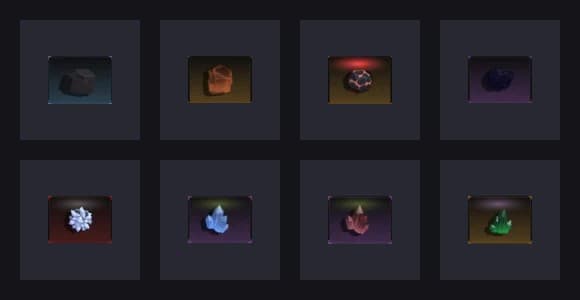
To understand what does demonite do in The Forge, we must first examine its fundamental properties. Demonite appears as a deep purple-black ore with pulsating red veins, found exclusively in corrupted zones and shadow-aligned dungeons. Unlike standard ores that simply provide crafting materials, Demonite carries inherent corruption properties that fundamentally alter items crafted with it.
When processed, raw Demonite Ore (mined from deposits) converts to Refined Demonite at a 3:1 ratio—3 Demonite Ore yields 1 Refined Demonite in a Corrupted Furnace. Standard furnaces cannot process Demonite; attempting to smelt it in regular facilities wastes the ore and produces nothing. This processing requirement represents the first answer to "what does demonite do in The Forge?"—it forces players down specialized corruption-aligned progression paths.
Refined Demonite exhibits unique properties that define what does demonite do in The Forge across all applications. Items crafted with Demonite gain the Corrupted tag, fundamentally altering their behavior. Corrupted equipment provides +25% damage against holy/light enemies, -15% effectiveness against shadow enemies, applies corruption debuffs to targets, and slowly drains the wielder's sanity meter (a corruption mechanic explained later). These properties make Demonite equipment exceptionally powerful in specific content while potentially problematic in others.
The corruption properties explain why what does demonite do in The Forge generates such varied opinions. Players focusing on shadow-aligned builds or corrupted content find Demonite absolutely essential—the single most important material for their progression. Players following holy/neutral paths or avoiding corruption mechanics find Demonite completely useless. Understanding your intended build determines whether learning what does demonite do in The Forge matters for your gameplay.

What Does Demonite Do in The Forge: Weapon Crafting
The primary answer to "what does demonite do in The Forge?" centers on corrupted weapon crafting. Demonite enables creating powerful dark-aligned weapons that excel against specific enemy types and in corruption-themed content.
Corrupted Blade Series: The most popular use for what does demonite do in The Forge involves crafting Corrupted Blades—a weapon line that offers exceptional damage at the cost of sanity drain. The basic Corrupted Longsword requires 12 Refined Demonite, 8 Shadow Iron, and 4 Void Crystals. This weapon deals 900-1,150 base damage plus 200-300 corruption damage (deals double damage to holy enemies, half damage to shadow enemies). The wielder's sanity drains at 2 points per minute, requiring sanity restoration items for extended use.
Advanced Corrupted Blades like the Demonite Greatsword (20 Refined Demonite, 15 Shadow Iron, 8 Void Crystals, 3 Demon Hearts) push damage to 1,400-1,800 base plus 350-500 corruption damage. The increased power comes with faster sanity drain (4 points per minute) and the Madness debuff—when sanity drops below 20%, your character suffers hallucinations, random movement, and friendly fire enabled. Understanding this trade-off is crucial to grasping what does demonite do in The Forge—immense power with significant risk.
Corrupted Staffs and Wands: Magic users asking "what does demonite do in The Forge?" discover Demonite enables powerful dark magic implements. The Demonite Staff of Shadows (16 Refined Demonite, 12 Ancient Wood, 8 Shadow Essence, 5 Demon Souls) channels corruption magic dealing 1,100-1,450 shadow damage with life-steal properties (recover 15% of damage dealt as health). The staff's passive, Soul Harvest, generates Soul Fragments from defeated enemies—currency for shadow faction vendors and crafting reagent for advanced dark recipes.
Corrupted magic weapons answer what does demonite do in The Forge for dark mage builds—they enable sustainable damage output through life-steal while generating valuable Soul Fragments. The sanity drain (3 points per minute) proves more manageable for ranged casters who avoid direct melee combat compared to frontline warriors wielding Corrupted Blades.
Corruption-Infused Bows and Crossbows: Ranged physical builds discover what does demonite do in The Forge through corruption-infused ranged weapons. The Shadow Crossbow (14 Refined Demonite, 10 Ironwood, 6 Void Crystals) fires bolts dealing physical damage plus corruption damage that applies the Withering debuff—reduces target healing by 40% for 8 seconds. Against enemies relying on regeneration or healer support, Withering proves devastating.
These ranged Demonite weapons suffer lower sanity drain (1-2 points per minute) compared to melee alternatives, making them the most sustainable option for players wanting corruption damage without severe sanity management challenges. This represents an important nuance in what does demonite do in The Forge—not all Demonite equipment carries equal corruption costs.

What Does Demonite Do in The Forge: Armor and Defense
Beyond weapons, what does demonite do in The Forge extends to defensive equipment with unique properties unavailable through standard materials.
Corrupted Armor Sets: Demonite enables crafting the Corrupted Plate Set—heavy armor providing exceptional shadow resistance and corruption benefits. The complete set requires substantial Demonite investment:
Total: 50 Refined Demonite, 41 Shadow Iron, 28 Void Crystals—approximately 150 Demonite Ore before processing.
The Corrupted Plate Set provides +85% shadow resistance, +40% physical defense, and the Corruption Aura passive—enemies within 5 meters suffer -15% attack speed and -20% healing effectiveness. The set bonus, Embrace Darkness, eliminates sanity drain when wearing the complete set and wielding Demonite weapons. This synergy defines what does demonite do in The Forge for dedicated corruption builds—it enables full-time use of powerful Demonite weapons without sanity management struggles.
Shadow Resistance Applications: A critical aspect of what does demonite do in The Forge involves shadow damage resistance. Late-game corrupted dungeons (Shadow Citadel, Void Temple, Demon's Sanctum) feature enemies dealing 70-90% shadow damage. Standard armor provides minimal shadow resistance, resulting in players taking massive damage. Corrupted Armor's +85% shadow resistance transforms impossible encounters into manageable challenges.
This situational power explains why veteran players farm Demonite despite its specialization—for specific endgame content, what does demonite do in The Forge becomes "makes the content possible." No alternative armor matches Corrupted Plate's shadow resistance, creating mandatory Demonite farming for players pursuing corrupted endgame progression.

What Does Demonite Do in The Forge: Enhancement and Enchantment
Beyond direct crafting, what does demonite do in The Forge includes enhancement systems that amplify equipment power.
Corruption Enhancement: Demonite serves as the reagent for Corruption Enhancement—a specialized upgrade system for shadow-aligned items. Applying Corruption Enhancement (costs 5 Refined Demonite, 3 Shadow Essence, 1 Corruption Catalyst per level) to weapons or armor adds:
Max enhancement (Level 3) requires 15 Refined Demonite per item—substantial investment but transformative for corruption builds. A Demonite Greatsword with Corruption Enhancement Level 3 reaches 1,800-2,300 base damage plus 600-850 corruption damage, rivaling legendary weapons. This enhancement potential significantly expands what does demonite do in The Forge beyond basic crafting.
Shadow Enchantment Crafting: Demonite functions as a component in shadow-aligned enchantments. The Soulreaper Enchantment (2 Refined Demonite, 4 Soul Fragments, 1 Enchantment Scroll) grants weapons 12% chance to instantly kill enemies below 15% health and harvest their souls. The Nightmare Enchantment (3 Refined Demonite, 5 Shadow Essence, 1 Enchantment Scroll) causes attacks to inflict hallucinations on enemies, reducing their accuracy by 30% for 6 seconds.
These unique enchantments answer what does demonite do in The Forge for players seeking build diversity—Demonite unlocks powerful effects impossible to obtain through standard materials. Even players not using full Demonite equipment often farm small amounts for these specialized enchantments.
What Does Demonite Do in The Forge: Faction and Economy
An often-overlooked answer to "what does demonite do in The Forge?" involves faction systems and economic applications.
Shadow Faction Currency: Refined Demonite serves as accepted currency for the Shadow Covenant faction vendors. These specialized merchants offer unique items unavailable through standard vendors:
These exclusive items define what does demonite do in The Forge for players pursuing corruption-focused builds. Demon Companions provide substantial DPS and utility. Corruption Mastery Tomes offer permanent power increases. Sanity Preservation Amulets eliminate the primary drawback of Demonite equipment. Shadow Teleportation Scrolls provide quality-of-life improvements for corrupted content farming.
Marketplace Value: Demonite maintains strong marketplace value due to limited supply and specific demand. Refined Demonite typically sells for 35-55 Robux each, making it more valuable than most standard materials. Players farming corrupted zones for other resources often mine Demonite deposits opportunistically, selling excess Refined Demonite for profit.
Understanding what does demonite do in The Forge from an economic perspective reveals profitable opportunities. A dedicated farmer gathering 40-60 Demonite Ore hourly (processing to 13-20 Refined Demonite) generates 455-1,100 Robux per hour from sales. This rivals or exceeds many other farming activities, making Demonite farming viable purely for economic reasons even without personal corruption build investment.

What Does Demonite Do in The Forge: Corruption Mechanics
A complete understanding of what does demonite do in The Forge requires examining the corruption mechanic system itself.
Sanity System: Using Demonite equipment activates the sanity system—a resource that depletes over time when wielding corrupted items. Your sanity bar (100 maximum) drains based on equipped Demonite items:
Sanity restoration requires consumables: Clarity Potions (restore 30 sanity, cost 150-200 Robux), Meditation (restore 5 sanity per minute, must be stationary and out of combat), or Purity Crystals (restore 50 sanity, rare drop from holy enemies).
Low sanity triggers increasingly severe penalties:
Managing sanity defines what does demonite do in The Forge for practical gameplay—it creates a resource management mini-game around corruption equipment. Skilled players balance Demonite equipment power against sanity costs, using restoration items strategically and switching to non-corrupted gear during downtime to minimize sanity drain.
Corruption Resistance: Extended Demonite use builds Corruption Resistance—a hidden stat that reduces sanity drain over time. Players using Demonite equipment for 50+ hours develop 20-40% Corruption Resistance, substantially reducing sanity costs. This mechanic rewards committed corruption builds while maintaining challenge for casual experimentation.
Understanding this progression answers what does demonite do in The Forge for long-term character development—initial use proves challenging due to severe sanity management, but dedicated investment makes corruption equipment increasingly sustainable. This design encourages specialization, as casual Demonite use never becomes fully comfortable while committed corruption builds eventually master the mechanics.

What Does Demonite Do in The Forge: Farming Locations
Knowing what does demonite do in The Forge proves useless without understanding where to obtain it.
Corrupted Hollows (Level 40-55): The primary Demonite farming location for mid-game players. This shadowy forest contains 15-20 Demonite deposits that respawn every 20-25 minutes. Each deposit yields 4-7 Demonite Ore with standard pickaxe, 6-10 ore with Shadow Pickaxe (specialized tool for corrupted resource farming). The zone features moderate enemy difficulty—Corrupted Wolves (level 42-48), Shadow Stalkers (level 45-52)—manageable for appropriately geared players.
Efficient farming routes in Corrupted Hollows yield 30-50 Demonite Ore hourly, processing to 10-17 Refined Demonite. This represents the answer to "what does demonite do in The Forge?" for most players—Corrupted Hollows provides accessible entry to Demonite gathering without excessive difficulty.
Shadow Citadel (Level 60-70): Advanced Demonite farming for endgame players. This corrupted fortress dungeon contains 25-35 Demonite deposits yielding 8-12 ore each (standard pickaxe) or 12-18 ore (Shadow Pickaxe). However, Shadow Citadel presents significant challenges—Demon Knights (level 62-68), Void Sorcerers (level 65-70), and complex dungeon navigation with traps and puzzles.
Solo Shadow Citadel farming proves extremely difficult; most players tackle it in 2-3 player groups. Successfully farming Shadow Citadel yields 60-90 Demonite Ore hourly (20-30 Refined Demonite), substantially higher than Corrupted Hollows but requiring significantly greater investment in combat capability and coordination.
Void Rifts (Level 75+ Endgame): The ultimate answer to "what does demonite do in The Forge?" includes Void Rifts—spontaneous corrupted portals spawning randomly across the game world. These challenging mini-dungeons contain dense Demonite deposits (3-5 deposits yielding 15-25 ore each with Shadow Pickaxe) along with powerful enemies and bosses. Clearing a Void Rift takes 15-20 minutes for skilled groups and yields 80-150 Demonite Ore plus rare corruption materials.
Void Rifts represent the most efficient Demonite farming but require high-level characters, strong group coordination, and ability to respond to random spawn locations quickly. Most players farm Corrupted Hollows or Shadow Citadel consistently while opportunistically clearing accessible Void Rifts when they spawn nearby.

What Does Demonite Do in The Forge: Build Synergies
Understanding what does demonite do in The Forge reaches completion by examining optimal build synergies.
Corruption Warrior: This build maximizes Demonite equipment effectiveness through complete corruption commitment. Wielding a Demonite Greatsword, wearing full Corrupted Plate Set, using Corruption Enhancement Level 3, and stacking Corruption Mastery Tomes, Corruption Warriors achieve extraordinary damage output (3,000-4,500 DPS) with excellent survivability. The Corrupted Plate Set's Embrace Darkness eliminates sanity drain, making the build sustainable for extended play sessions.
For this build, what does demonite do in The Forge becomes "enables the entire character concept." Corruption Warriors require 80-120 Refined Demonite for initial setup plus 30-50 additional Demonite for Corruption Mastery Tomes and enhancements—substantial investment justified by exceptional performance in shadow content.
Hybrid Corruption Assassin: This build uses selective Demonite equipment for key benefits while avoiding full corruption commitment. Wielding Dual Corrupted Daggers and wearing 1-2 Corrupted Armor pieces for partial shadow resistance, Hybrid Assassins gain corruption damage without overwhelming sanity drain (3-5 points per minute, manageable with occasional Clarity Potions).
For hybrid builds, what does demonite do in The Forge becomes "provides specialized tools for specific situations." Hybrid Assassins might use Demonite weapons for corrupted content while switching to standard equipment for other activities—flexible approach requiring moderate Demonite investment (30-50 Refined Demonite).
Economy-Focused Farming: Some players farm Demonite purely for economic profit without personal use. These farmers answer "what does demonite do in The Forge?" with "generates income through marketplace sales." Using Shadow Pickaxe and optimized farming routes, dedicated farmers accumulate 15-25 Refined Demonite daily, selling for 525-1,375 Robux daily profit.
This approach requires minimal Demonite investment (only Shadow Pickaxe crafting: 8 Refined Demonite, 12 Shadow Iron, 6 Void Crystals) while generating consistent income. Players uninterested in corruption builds but seeking profitable farming activities often choose Demonite gathering for its strong marketplace demand.
Common Misconceptions: What Does Demonite Do in The Forge?
Several misconceptions surround what does demonite do in The Forge. Let's clarify:
Misconception: "Demonite is mandatory for progression."
Reality: Demonite equipment represents one specialization path among many. Players can reach endgame using holy, neutral, or elemental equipment without touching Demonite. Understanding what does demonite do in The Forge helps you decide if corruption specialization aligns with your preferred playstyle—it's optional but powerful for those who choose it.
Misconception: "Sanity drain makes Demonite equipment unusable."
Reality: While sanity management creates challenges, the Corrupted Plate Set's Embrace Darkness eliminates drain for complete builds. Additionally, Corruption Resistance reduces drain over time, and Sanity Preservation Amulets cut drain by 50%. What does demonite do in The Forge includes providing tools to manage its own drawbacks.
Misconception: "Demonite is only for PvE content."
Reality: Corrupted equipment excels in PvP against non-corruption builds. The Withering debuff, Corruption Aura, and high burst damage prove devastating. Understanding what does demonite do in The Forge reveals strong PvP applications, particularly against holy-aligned opponents suffering doubled corruption damage.
Conclusion: What Does Demonite Do in The Forge?
So, what does demonite do in The Forge? This powerful corrupted material enables crafting shadow-aligned weapons and armor, provides unique enhancement options, serves as shadow faction currency, generates marketplace income, and unlocks specialized corruption mechanics. Demonite transforms players who embrace it into powerful corruption specialists capable of dominating shadow content and devastating enemies vulnerable to corruption damage.
Whether you should invest in Demonite depends on your build goals. Players pursuing corruption specialization find Demonite absolutely essential—the cornerstone material defining their entire character. Players following other paths can safely ignore Demonite or farm it purely for economic profit. Understanding what does demonite do in The Forge helps you make informed decisions about this specialized but powerful material.
If corruption specialization appeals to you, begin farming Corrupted Hollows for initial Demonite supplies. Craft your first Corrupted weapon or armor piece to experience the mechanics. Gradually build toward complete Corrupted Plate Set for sanity management. Invest in Corruption Mastery Tomes for permanent power increases. Master the sanity system and watch your corruption build transform into one of The Forge's most potent specializations. Now you know exactly what does demonite do in The Forge—embrace the darkness and unleash its power!